
The following are notes from Chris Voss: One-on-One with Paula Faris at #GLS19. Use them to help you apply the content you learned at the Summit.
Paula Faris: What do I have to learn from a hostage negotiator?
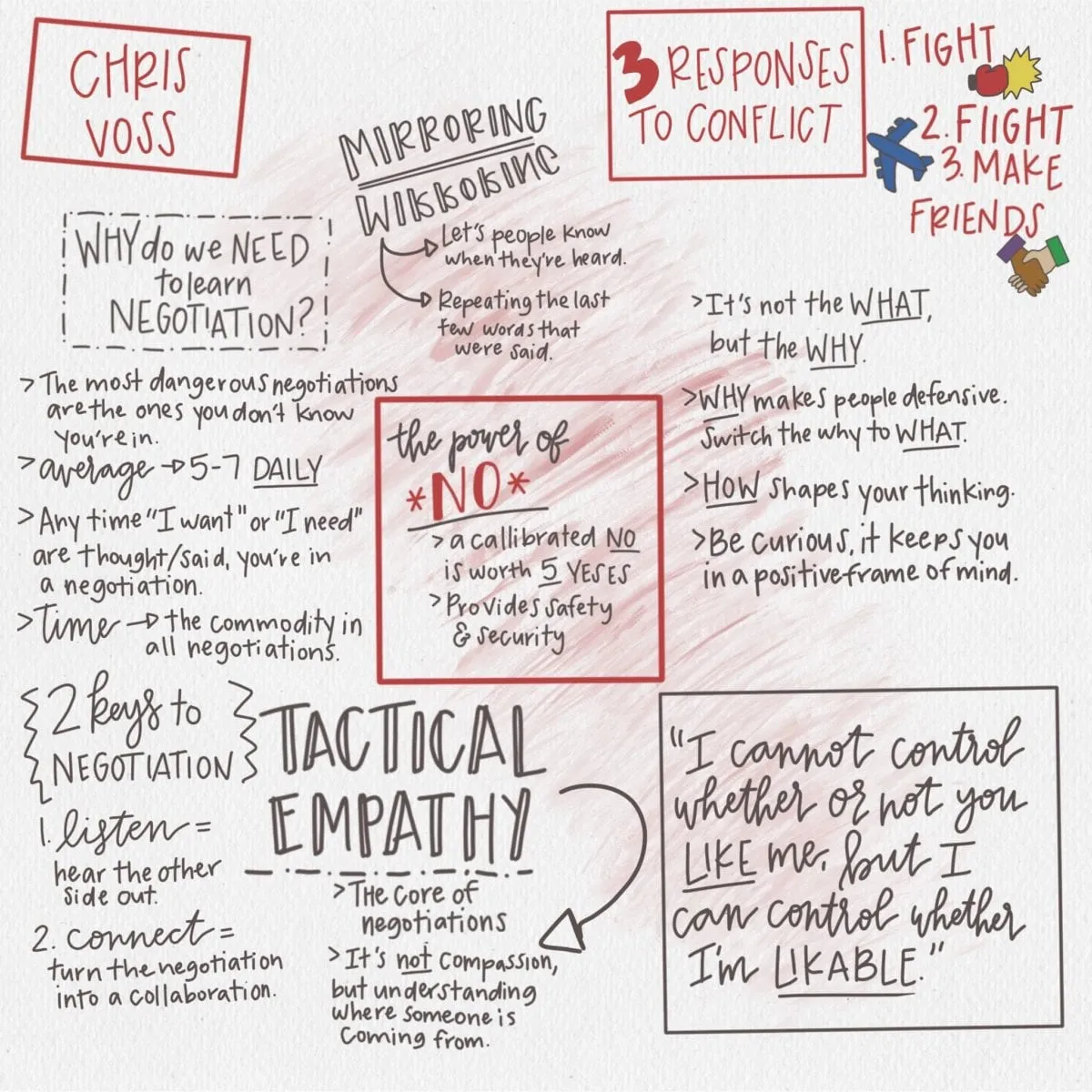
Chris Voss: Anytime, the words I want or I need are in your head, you're in a negotiation. The most dangerous negotiation are the ones you don't know you're in. And all of us are probably in five to seven negotiations each day.
- If the words “I want” or “I need” are coming out of your mouth
- I want directions
- I need five more minutes
- I need you to collaborate
- The commodity that's in all negotiations is time and it's a commodity that we all have
Faris: Is this a skill anyone can learn or are some people better at it than others?
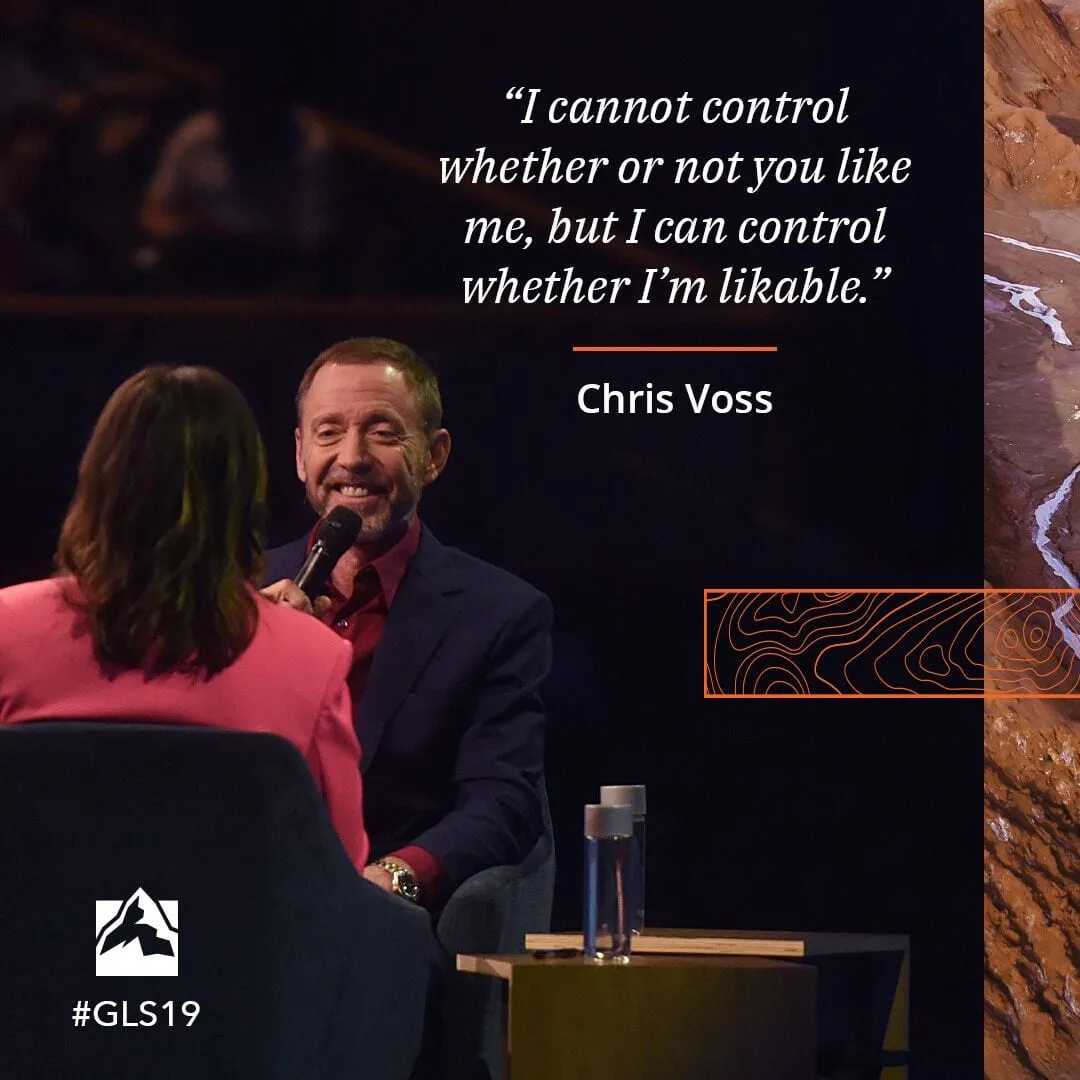
Voss: It's absolutely learnable. As soon as you start putting in your time, and if you enjoy it, then you don't notice you're putting in your time. But absolutely, we all have the capacity to be really good at it.
Faris: What should our mindset be when we're entering a negotiation?
Voss: Turn the negotiation into a collaboration-connect. You'd be shocked at how far you will get when you connect with people. If the other side feels you've connected with them, they're going to look at you and say, “That's right,” and feel more connected to you.
Faris: Why is tactical empathy important in negotiation?
Voss: Don’t confuse empathy with sympathy and compassion. Empathy is not compassion; it’s a compassionate thing to do and a step towards compassion, but it is not compassion. Empathy is completely understanding where someone is coming from and being able to articulate it, especially the parts you might not like. Those are the critical issues. If you find you intimidate someone, you should say, “I probably intimidate you.” That's going to demonstrate understanding on your part.
Faris: Give me an example of how you would use tactical empathy in a negotiation.
Voss: At the beginning of a negotiation, call out the elephant in the room and don’t deny it being there. As soon as you do that, it's not that bad.
Faris: What are other tactics?
Voss: Mirroring. Repeat the last couple of words the person said. It lets them know they were heard, but say this with an upward inflection so they know it wasn’t quite enough, so they can further expand. You want them to hear all that, and then they expound and talk more.
Faris: Why should we not say, “I understand?”
Voss: This shows we want someone to stop talking. You want to get to the “why” not the “what” they’re asking for. The word “why” makes people feel defensive. Switch it to “what,” and they’re more likely to answer.
Faris: What is the difference of an open-ended versus a close-ended question?
Voss: Focus on “what” and “how.” People love telling us how to do stuff. It triggers more in-depth thinking so we can shape the other person’s thinking.
Faris: What happens when you feel like the negotiation is slipping away?
Voss: Call it out. “It doesn’t feel like I’ve earned your trust.” This encourages someone to share what the problem is. If you ask what the problem is or why there is an issue, the other person will feel accused.

Related

Turning Banana Plant Waste Into Hope

Twelve Years Later, She Started the Fishpond

5 Strategies to Help Perfectionist Leaders Stay Effective Without Burning Out
Leadership That Lasts
Team365 isn’t just a platform. It’s a commitment to grow, lead and live with purpose — every single day. Whether you’re here for content, community or clarity, you’re in the right place. Your leadership matters. Let’s keep going.