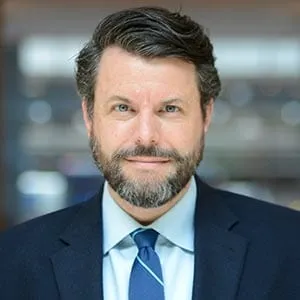


Have you ever spent an entire day frantically working, only to finish and wonder if you’ve actually accomplished anything significant? Is there a way to truly be more productive and not simply busier? Paula Faris interviews New York Times best-selling author Charles Duhigg on how to distinguish between mere busyness and true productivity, and also shares real-world, practical techniques to super charge not only your own productivity, but also the productivity of the teams you lead.
SUMMARY:
Have you ever spent an entire day frantically working, only to finish and wonder if you’ve actually accomplished anything significant? Is there a way to truly be more productive and not simply busier? Paula Faris interviews New York Times best-selling author Charles Duhigg on how to distinguish between mere busyness and true productivity, and also shares real-world, practical techniques to super charge not only your own productivity, but also the productivity of the teams you lead.
KEY TAKEAWAYS:
Defining Productivity
- Busyness and productivity are not the same thing.
- The most important question you can ask yourself is, “What deserves my attention right now?”
- Productivity looks different for different people and different contexts.
- We need systems and habits that give us space and time to ask ourselves, “What is most important right now?”
- Knowing your “why” helps you define productivity for yourself.
Building Better To-Do Lists
- Make shorter, not longer lists. A “To-Do List” is not the same as a “Memory List.” Just 3 things suffice.
- Ask yourself, “What’s the most important thing to do today?”
- Productivity comes from prioritization.
- If you’re putting something off because you dread doing it, it’s likely the most important thing you should be doing.
- Look at your Memory List and ask yourself, “Which of these items, if I accomplished them today, would I feel best about?”
Principles of Productive Teams: Psychological Safety
- Saturday Night Live succeeded, in part, because of the psychological safety created by show creator Lorne Michaels.
- Ostentatious listening from a team leader allows people feel heard and encourages everyone else on the team to start listening as well.
- Team norms differ from team to team, but what matters is that the team feels like they are able to choose those norms for themselves.
Principles of Productive Teams: Effective Culture
- The most effective startup culture is a “Culture of Commitment”: culture is not based on rules or stars but rather based on a company maintaining its commitment to its people at all costs, helping them to be their best at their work.
Principles of Productive Teams: Lean Management
- Whoever is closest to the problem is often the expert on that problem (and therefore should be empowered to solve the problem).
RELATED LINKS:
The Power of Habit: Why We Do What We Do in Life and Business
Smarter Faster Better: The Secrets of Being Productive in Life and Business
Called Out: Why I Traded Two Dream Jobs for a Life of True Calling (Paula Faris)
The Premonition: A Pandemic Story (Michael Lewis)
The Surfline App: Check the Ocean From Wherever You Are
Dawn Patrol App: Track your waves, Relive your surf, Share your session
Jamie Franklin, True Leadership Builds a Culture Where People Thrive
SPECIAL LISTENER BENEFITS:
Be sure to use your exclusive listener code PODCAST21 at checkout to get $60 off our regular ticket price for The Global Leadership Summit on August 5-6, 2021!
Related
Ep 210: What Leaders Miss About Motivation, Purpose and Progress
In this episode, GLN President and CEO David Ashcraft talks with Chris McChesney, author of The 4 Disciplines of Execution, about the difference between employee satisfaction and true engagement. Chris explains why people can have what looks like an ideal job and still feel disconnected from the work, while others can serve in demanding environments and remain deeply motivated. The difference often comes down to progress and purpose.
Ep 209: Communication, Candor and Trust
In this episode, Whitney Putnam and GLN President and CEO David Ashcraft talk about one of the most common leadership challenges: how to communicate with clarity, candor and care when the stakes are high. They unpack a real moment from a recent GLN all-staff meeting, where a public challenge created tension, required follow-up and ultimately helped sharpen strategy. Whitney and David explore why leaders often think they are being clear when others are hearing something different, how trust makes hard conversations possible, and why “keeping short accounts” can prevent tension from becoming toxic.
Ep 207: Leading Through Leadership Hijacks with Edgar Sandoval
In this episode, GLN President and CEO David Ashcraft talks with Edgar Sandoval, President and CEO of World Vision, about navigating what David calls “leadership hijacks”: unexpected events that reshape both leadership and life.
Leadership That Lasts
Team365 isn’t just a platform. It’s a commitment to grow, lead and live with purpose — every single day. Whether you’re here for content, community or clarity, you’re in the right place. Your leadership matters. Let’s keep going.